10 Rules for Organizing That Work in Every Room
Forget the hacks and complicated systems. These 10 tried-and-true rules for organizing work in every room of the house and will make your home feel both easier to manage and maintain.

I’ve tried plenty of organizing tricks over the years, and while some work for a season, most don’t stick—because the way we organize and use each space is so personal.
What has stood the test of time, though, are a handful of simple organizing rules. They’re the ones I lean on in every room of our house, whether I’m reworking the pantry, corralling toys, or resetting my closet.
Here are my 10 tried-and-true rules of organizing you can use anywhere in your home.
Rule #1. Do not organize until you’ve decluttered
Someone once said, “You can’t out-organize a clutter problem,” and wow—has that proven true in my own home. Once you clear the excess, organizing becomes easier—not just to do, but to keep up with.
Take toys, for example. For years, I kept buying more baskets and bins, hoping they’d solve the chaos. But the truth was, we just had too much stuff. Once I finally decluttered the toys, those baskets and bins did what they were meant to, and were much easier to keep organized.
Need help decluttering before you organize?
Check out my signature SOS Declutter Method—a simple, three-step system that will help you clear the clutter, get organized, and establish systems to keep your space clutter-free for good. It’s the exact decluttering process I use in our home!
Rule #2. Give every item a home
Everything you own should have a place to live when you’re not using it. If it doesn’t, it’ll end up cluttering surfaces or going missing.
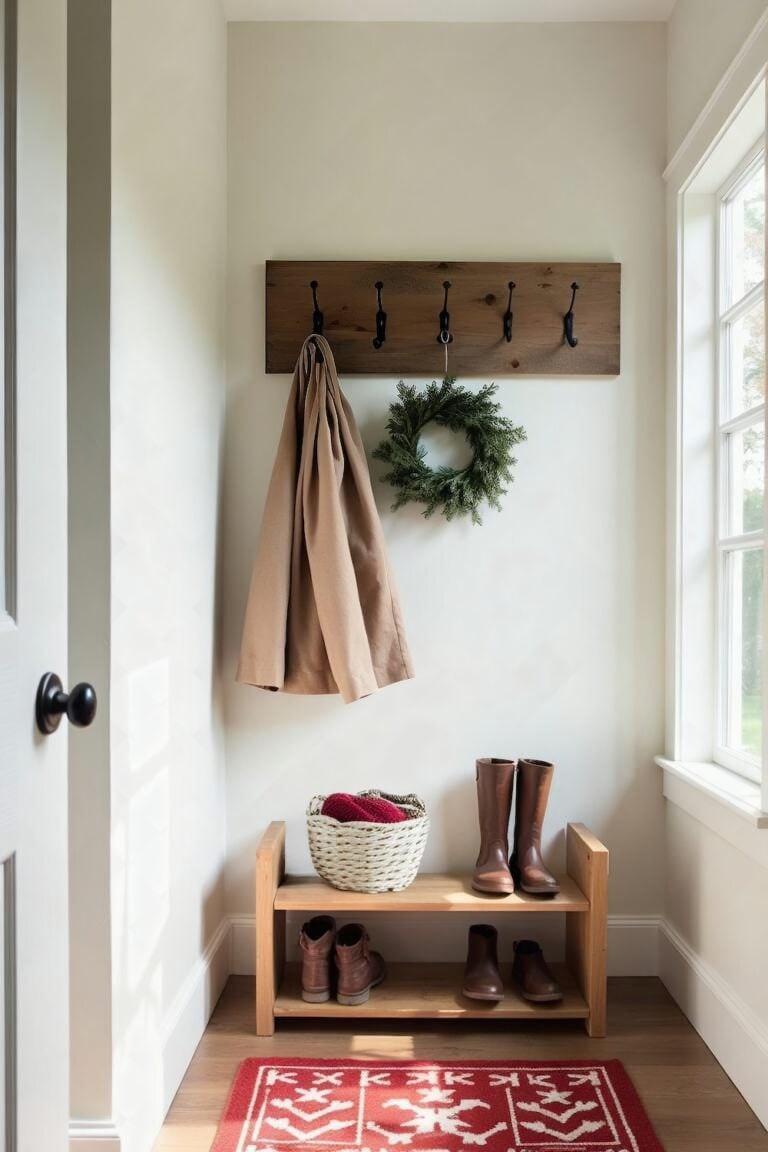
In our house, the kids’ backpacks hang on hooks in the entryway, my trusty label maker lives in an office drawer, and the scotch tape, stapler, and rubber bands all belong in the junk drawer by the fridge. When everything has a home, life runs smoother and I get way fewer “Mom, where’s my ___?” questions.
Rule #3. Keep things where you use them
Store items as close as possible to where you actually use them. The less distance between the item and the action, the easier it is to grab when you need it—and put back when you’re done.
Sometimes that means giving similar items more than one home. My daughter has a hairbrush in her upstairs bathroom, but we also keep one under the downstairs sink (along with extra hair ties) to make our mornings smoother. We do the same with the kids’ toothbrushes—one upstairs, one downstairs—so no one has to run back up just as we’re heading out the door.
Rule #4. Protect the everyday
I picked up this principle from Melissa Coleman, author of The Minimalist Kitchen, and it’s something I’ve applied to nearly every space in our home over the last few years.
The idea is to keep your everyday spaces uncluttered by giving prime real estate only to the things you reach for often. Everything else—backups, seasonal items, or things you use occasionally—can live up high, in the back of a closet, in a storage space like the basement or attic—anywhere out of the way.
In my desk drawer, for example, I keep just a couple of pens and sticky notes; the backup stash lives in a labeled bin in the laundry room. Rather than stuffing a drawer with a dozen dish towels, I keep three or four in rotation and store the extras in a cabinet with our tablecloths. Same with cups and mugs: our everyday glasses stay on the lower shelves, while wine glasses, travel mugs, and pitchers live up high. Protecting your easy-to-reach spots for only the essentials makes it easier to put things away and stay organized.
Join the Community
Join 23,000+ readers ditching clutter, stress, and chaos for more time, energy, and joy.
My short emails will show you how.
Rule #5. Contain categories
Baskets, bins, and dividers are key for keeping order. I like to use them to corral categories of items, but also to set a boundary for how much space that category can take up.
For example, my daughter’s stuffed animals all live in one big basket. It makes tidying up easy, and if the basket ever gets full, that will be her cue to pare down before she can add any more. (Turns out, seeing the basket fill up is a great deterrent—you’re less likely to bring home a new one when you know you’ll eventually have to part with an old favorite.)
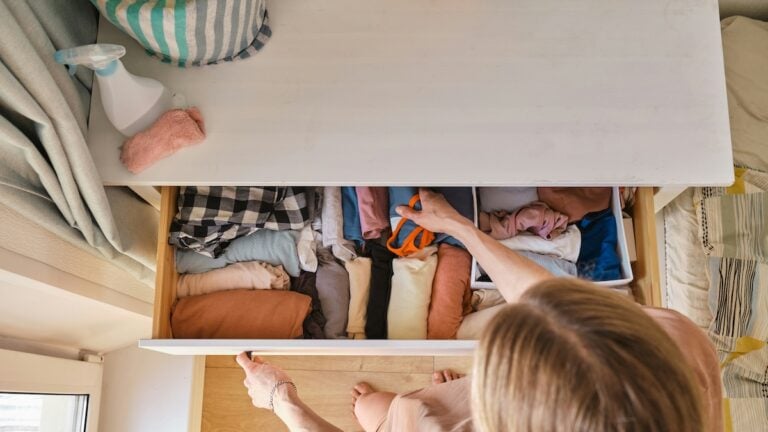
In dressers, I use dividers to keep categories from spilling into each other—bras, socks, and underwear that share a drawer, or separating short sleeves from long sleeves so you don’t have to unfold half the drawer.
In our pantry, bins help me corral ingredients. I have one for canned beans, one for tomatoes and jarred sauces, another for flour and leaveners, spreads like honey, Nutella, and nut butters, even different cuisines like Asian sauces and noodles.
Containing categories keeps things tidy and makes belongings easier to find, but also gives me a built-in limit. When a bin is nearly full, that’s my reminder to declutter and let go of the extras.
Rule #6. Favor visibility
Clear or open bins work best for everyday items. When you can see what you have, you’re more likely to use it—and less likely to buy duplicates.
Our fridge is a great example. I use clear food storage containers so we always know what needs to be eaten first. In the pantry, I stick with open bins so I can quickly find what I need and see what we’re running low on at a glance.
Opaque bins or lidded containers can work too, but I save those for things we don’t use as often (like holiday décor and seasonal sports gear), and make sure they’re clearly labeled—which brings us to Rule #7!
Rule #7. Label when it helps
Labels take the guesswork out of where things belong. I especially love them in shared spaces, kids’ bedrooms, and playrooms.
Since the kids were little, I’ve labeled their dresser drawers—socks, PJs, t-shirts, pants—so they can easily put away their own laundry. It doesn’t always happen, but a mom can hope!
I also label our pantry bins. A little sticker saves me from a million questions and also makes it easier for family members to put items back in the right spot.
That said, you don’t need to go label-crazy. If it’s obvious, skip the label. Use them where they’ll actually make life easier, not just for the sake of labeling.
My favorite little labeling gadget is this Bluetooth label maker that connects to my phone. It’s small, effective, and easy to use!
Rule #8. Don’t overstuff
Give your drawers, shelves, and baskets a little breathing room. With some space around your things, it’s so much easier to see what you have and put it back when you’re done.
In our house, I try to keep closets and cabinets no more than half full. That means two sets of sheets per bed, two towels per person in the linen closet, and just enough mugs to fit comfortably on half a shelf—no stacking or teetering mug towers.
It’s taken me a while to pare down this much, but now that I have, I can honestly say the empty space is more valuable than all the stuff that used to fill it.
Rule #9. Prioritize function over picture-perfect
Don’t get hung up on making everything look pretty. A rainbow-ordered pantry might look great on TV, but can you imagine trying to maintain it? Pretty is nice, but functional is more important.
Take my spice drawer. I don’t have them alphabetized or decanted into pretty glass jars. I organize them by type (sweet on the right, savory on the left) and keep the ones I reach for most in the front where they’re easiest to grab and put back. Not exactly Pinterest-worthy, but it works and is easy to maintain.
Rule #10. Save the bins for last
First decide where something should live, then figure out the best way to contain it. Before buying anything new, shop your house—you might already have the perfect basket or bin in another room. And if you do decide to purchase something, always measure first so you know it will fit and make the most of the space you have.
When I organized our bathroom drawers, I borrowed a few clear bins from another drawer to test the setup. After a couple of weeks, I realized I needed a few more sections, so I bought bins in a similar size with extra dividers. Testing it first helped me see what actually worked before spending money on new organizers.
Despite what you see on Instagram, organizing isn’t about creating a picture-perfect home. It’s about making your life easier—so you can find what you need, keep your home tidy with minimal effort, and not spend all weekend reorganizing it.
These 10 rules are the ones I come back to over and over, and they always hold up no matter which space I’m working on—even across different areas of the house.
If you’re ready to start organizing but feel like clutter is getting in the way, my signature SOS Declutter Method will help you clear the excess, get organized, and set up simple systems to keep your home clutter-free.