
The SOS Declutter Method That Keeps Clutter Away for Good
Tired of decluttering only to watch the piles return? The secret to staying clutter-free isn’t more bins—it’s a better declutter method. With the SOS Declutter Method, you’ll learn my simple 3-step process that helps you let go, get organized, and establish systems to maintain a decluttered home.

If you’ve ever watched Marie Kondo’s The Life-Changing Magic of Tidying Up or the rainbow-themed organizing show, The Home Edit, you know the focus is on the big cleanout. Get rid of all the extras, make what’s left look pretty, and bask in your newly simplified space.
Sure, it looks and feels amazing—for a while! But here’s the reality: unless you have a plan to maintain it, the clutter will inevitably return.
That’s why I created the SOS Declutter Method, a simple, repeatable three-step process to help you declutter, organize, and keep any space clutter-free for good.
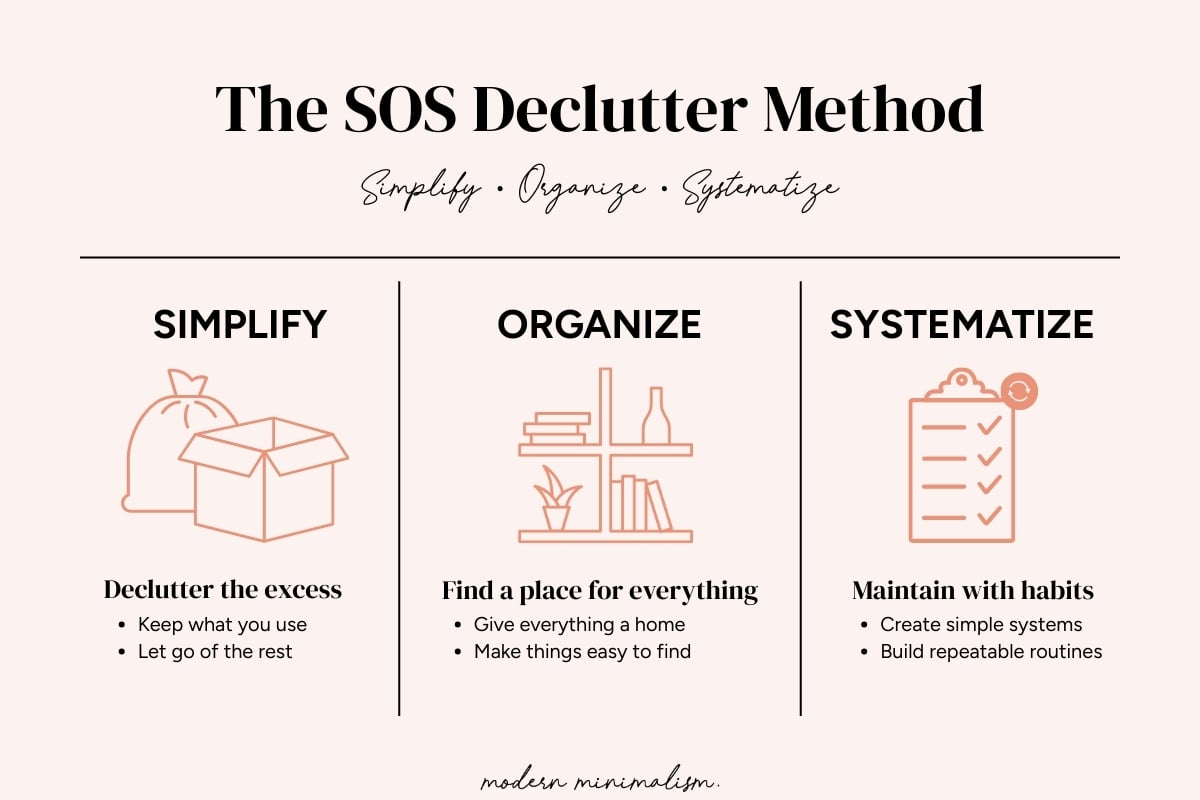
SOS Decluttering Method Overview
The SOS Method divides the decluttering process into three key steps: Simplify, Organize, and Systematize. Here’s how it works:
Step 1: Simplify
Simplifying is all about cutting the excess so you’re only left with the things you actually need, use, and love.
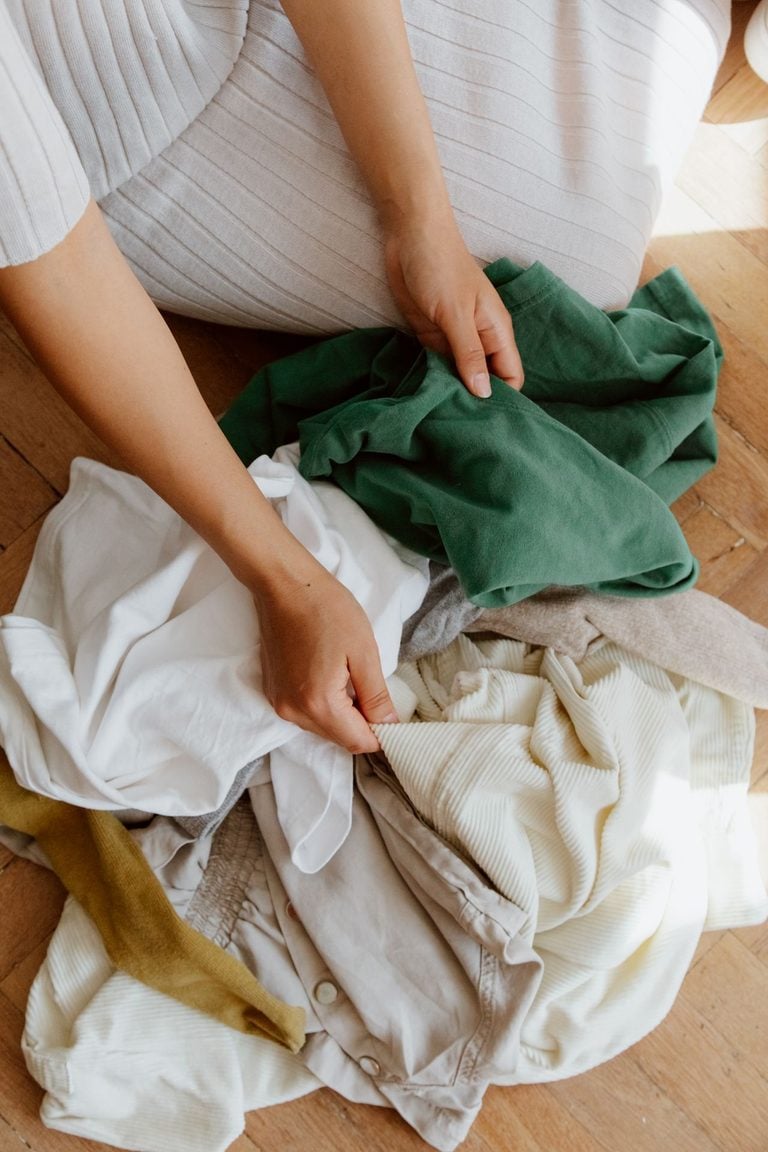
Decluttering your home can be a daunting task, but it doesn’t have to be. The key is to do it in small chunks—one room, one zone, or one category at a time. (Think: the junk drawer, your sweater stack, or that one overcrowded kitchen shelf.) Starting small helps you avoid getting overwhelmed, and it provides quick wins that build momentum.
When I declutter, I like to begin by pulling out the obvious must-keep items—the things I rely on every day or that add value to my life. I then take a harder look at everything else.
Tips to make decluttering easier:
- Break it down. Don’t try to tackle the entire house at once. Large spaces are more manageable when divided into zones or categories. By starting with one corner of the basement, or one shelf in the closet, you’ll minimize overwhelm and see more meaningful progress.
- Pull everything out. Yes, it gets messy, but laying it all out helps you see duplicates, forgotten items, and how much you actually own.
- Decide quickly. Keep, donate, sell, recycle, or toss it straight into the trash. Try not to overthink or need to justify every single item. Set a timer and trust your gut.
- Use a “maybe” box when necessary. If you truly can’t decide, put it aside in a separate box. If you haven’t reached for anything after 90 days, let it go.
Questions to guide you:
I find these questions really help whenever I’m struggling to make a decision. Ask yourself:
- Would I buy this again today?
- Do I need or use this regularly?
- Do I already own something similar?
- Do I love it enough to maintain it and make room for it in my home?
- Am I keeping this out of guilt, obligation, or “someday” thinking?
- Does this fit my lifestyle now, or a past/future version of me?
Try these quick rules if you get stuck:
- 20/20 Rule: If you can replace it for under $20 in 20 minutes or less, it’s probably safe to let it go.
- 6/6 Rule: Haven’t used it in the last six months and won’t in the next six? Maybe it’s time to say goodbye.
- 50% Rule: Aim to cut the number of items in half, or leave drawers, closets, and cabinets half empty. Empty space is truly a gift. It makes finding, using, and putting away your possessions so much easier.
Once you’ve decluttered a space, the next step is to organize what’s left.

More than 20,000 readers love my short, weekly emails filled with real-life ways to simplify your life.
Step 2: Organize
The goal of organizing isn’t to create a picture-perfect pantry or color-coded closet. It’s to make your things easier to find, use, and put away.
If getting or staying organized feels impossible, it’s probably not you. Chances are you’re trying to organize more than anyone reasonably could, or your systems are just too complicated to stick with.
Over the years, I’ve found there are a handful of principles that make organizing easier and more sustainable. Here are five of my go-to rules you can use in any space:
- Don’t organize until you’ve decluttered. You simply cannot out-organize a clutter problem. Declutter first, then organize what’s left.
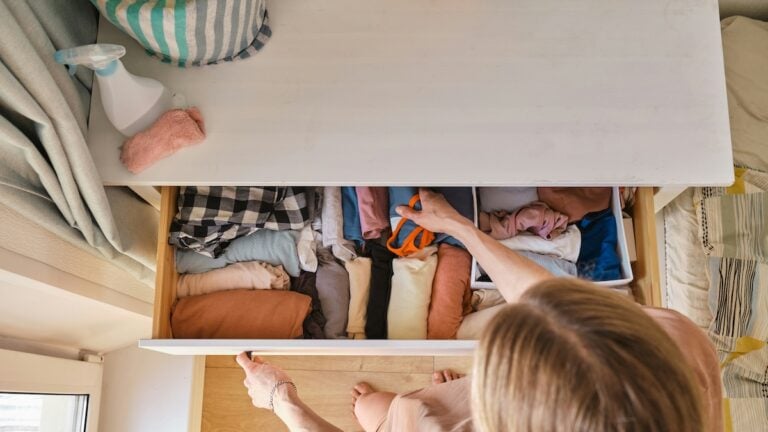
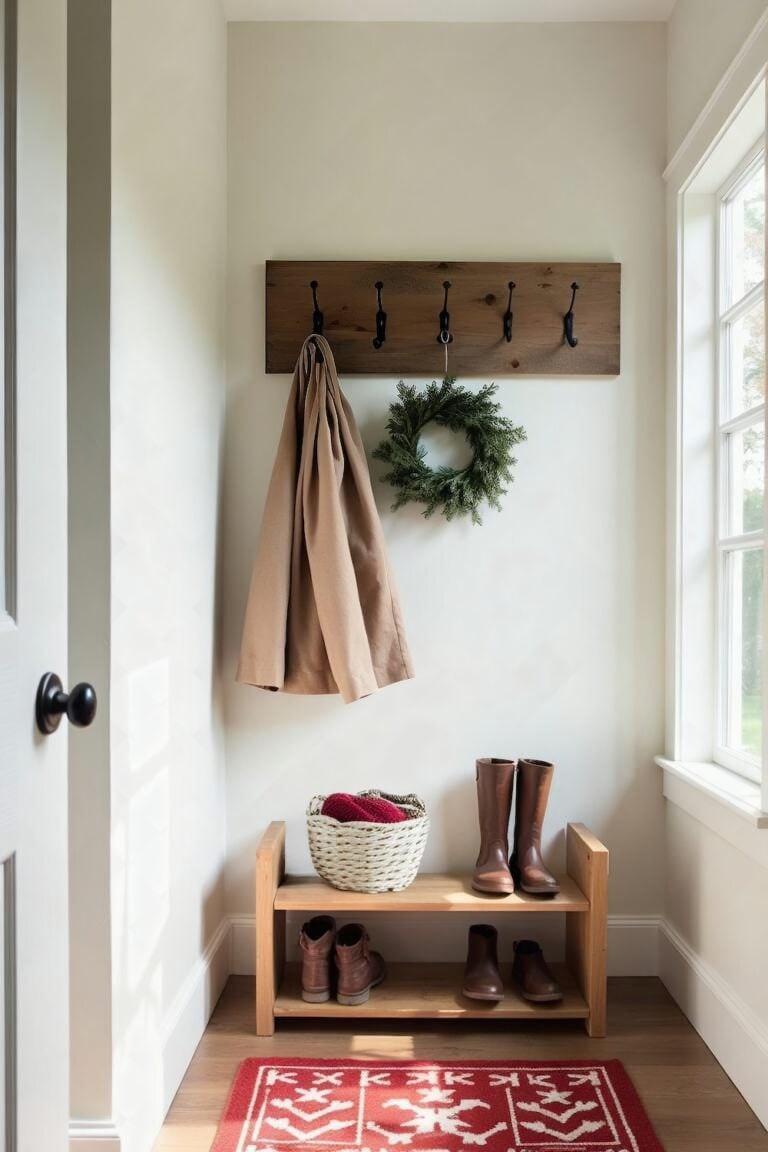
- Give every item a home. Everything you own should have a spot where it “lives” when you’re not using it.
- Keep things where you use them. Store utensils by the stove, oven mitts near the oven, and backpacks by the door. Keep teeth and hair essentials in the downstairs bathroom if it makes your mornings more efficient (we do!). The closer items are to their point of use, the easier they’ll be to reach and put away.
- Contain categories. Use baskets, bins, dividers, drawers, or shelves to contain categories or like items. This keeps things neat and also establishes a natural boundary. When the basket is full (or even half full), it’s time to pare down.
- Save the bins for last. Organizing is less about pretty containers and more about creating a spot for everything you own. Once you’re clear on where something should go, then decide how to contain it. Repurpose bins and baskets you already own, and only buy new if you really need to. When you do, go for clear or open containers and always measure to make the most of your space.
If you’ve found these helpful, you’ll love the rest of my organizing tips. Here are the 10 principles I use in every space.
Step 3: Systematize
This is the step most people skip (or don’t even know they need), but it’s essential if you want to prevent the clutter from returning. Once you’ve simplified and organized, the final step is to put systems in place that make tidying almost automatic.
A framework to tackle any space that’s always messy.
Just three questions will help you figure out why the clutter keeps piling up and create a system to address it that’s easy to stick with.
- Why does this spot keep getting messy? Is it too much stuff, no clear home, or no routine for putting things away? The best systems address the root cause of why things get messy in the first place.
- What’s the simplest way to keep this space clear? What’s the simplest way to keep this space clear? It could be as simple as adding a bin or label, setting a daily, weekly, or seasonal reset, or establishing a boundary on how much can come into your home or fit in a particular space. If it is complicated or overly ambitious, it won’t stick.
- How can I build it into our routine? Create a habit, rule, or reminder so that the system becomes part of your natural rhythms and routines. This could be a nightly tidy, a seasonal purge, or a designated donation station in the garage. If you’re trying to reduce the number of items coming into your home, try implementing a “no freebies” policy or a wait period for any non-essential purchases.
Here are a few systems we’ve created to address common clutter struggles in our home:
- Paperwork: To keep piles from growing, I immediately recycle anything I can access online — think instruction manuals or autopay bills. The rest gets sorted into five folders: Needs Action, Follow-up, File, plus one for each kid’s schoolwork and art. I set aside 10–15 minutes a week to process and purge so the papers stay under control.
- Laundry: As our family grew, I realized hampers were just creating a mountain of overwhelm by the end of the week. Now I keep two laundry baskets on top of the washer. When one’s full, it goes straight in and is washed, dried, and put away that same day.
- Dishes: If the kitchen is messy, I feel messy too. Our system is simple: load dishes during the day, run the dishwasher at night, and unload it first thing in the morning. This flow keeps the counters and sinks clear and helps my brain feel less cluttered.
- Stuff management: A quick nightly tidy is a game-changer. I reset the kitchen, pick up stray items, and lay out what we need for tomorrow. Even if the whole house isn’t perfect, waking up to clear counters makes our mornings so much smoother.
- Donation station: This might be my favorite decluttering tip: Make it as easy to get stuff out of your home as it is to bring it in. I’ve found letting go is exponentially easier when there’s a convenient place for unwanted things to go. Now I keep a trash bag in each kid’s closet for outgrown clothes and a couple of empty boxes in the garage for everything else. Once they’re full, it’s time to make a donation run.
- No freebies we don’t need: We all know free stuff isn’t really free. Every extra water bottle, sticker sheet, party favor, and hand-me-down requires your time, energy, and space. Over the last few years, we’ve all made an effort to stop bringing home freebies we don’t need, and it’s made a huge difference in reducing the clutter creep.
Why the SOS Declutter Method Works
Most decluttering methods will get you a clean slate, but they rarely show you how to keep it that way. The SOS Method is different because it helps you declutter, get organized, and set up systems so you don’t end up back where you started six months later.
If you’re ready to dive in, here are some helpful guides to help you Simplify, Organize, and Systematize your home:
Need extra support? I specialize in helping families create simple home systems that work in real life. With my 1:1 virtual declutter coaching, I’ll help you simplify your space, organize what’s left, and set up systems that fit your routines—so your home works for you, not against you.

Here’s to a home that’s easier to maintain — and more space, time, and energy for the things and people that matter most.


I come bacK TO THIS POSTING TIME TO TIME TO REFRESH MY VIEWS ON CLUTTER. Thank you for good points!