How to Declutter Clothes (7 Key Questions + Interactive Flowchart)
If your closet feels more crowded than ever, this guide will teach you how to declutter clothes with seven key questions. Want the questions in front of you while you work? Get the free printable or try out the interactive flowchart below.
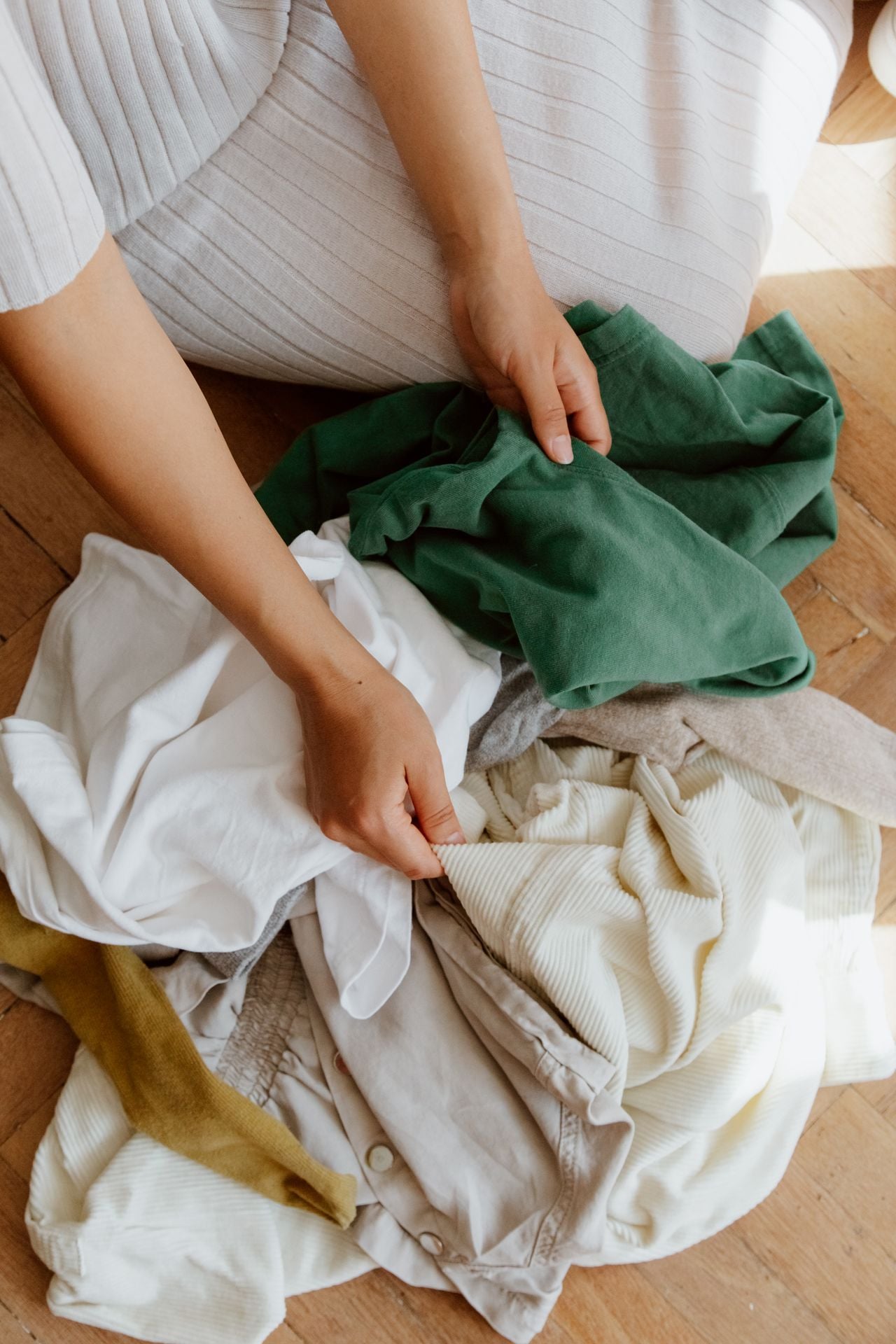
One of the hardest things about decluttering clothes is that, often, there’s nothing obviously wrong with the things we talk ourselves into keeping. They might be beautiful, expensive, or perfectly wearable. We just don’t wear them.
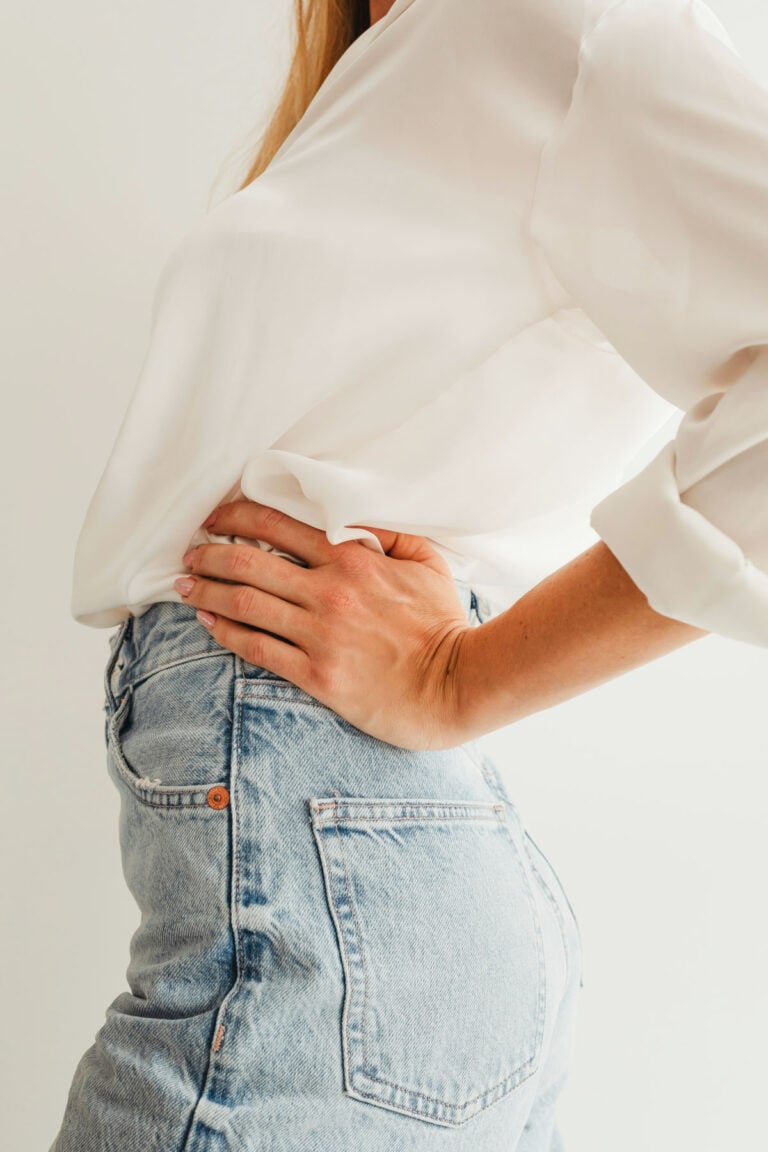
For over a year, I held onto a pair of jeans that had gotten a smidge too snug (oh, the joys of perimenopause!). I loved the length, the silhouette, and how easily they worked with the rest of my clothes, so they passed a few of my basic decluttering questions: Do I like these? Do they work with the rest of my wardrobe? I kept them, hoping I’d wear them again someday.
This last time I decluttered, though, I asked myself a different question: Do they fit and feel good to wear? The answers (barely and definitely not) ultimately helped me let them go.
That question inspired me to put my whole process down on paper and create a handy flowchart to help you declutter your clothes, too. It walks you through the same questions I use in my own wardrobe and with declutter coaching clients, along with what to do when you’re ready to let something go.
Before you begin
I have three rules I follow whenever I’m decluttering anything:
- Start with the easy stuff.
- Choose one small area or category to tackle first.
- Get everything out in the open.
Easy decisions build momentum, confidence, and motivation. Focusing on one space or category keeps the process from becoming overwhelming, and laying everything out helps you spot duplicates, rediscover forgotten items, and see how much you actually own.
For clothing, I typically recommend breaking your wardrobe down by category and starting with the easier ones, like socks, underwear, athletic clothes, and pajamas. These tend to carry less financial or emotional baggage than other categories might. From there, I’d move on to layering t-shirts and tanks, tops, sweaters, bottoms, shoes, outerwear, and finally accessories.
Start wherever feels manageable, and remember that you don’t need to tackle your entire wardrobe in one day.
7 key questions to declutter clothes
I run every piece I don’t regularly wear through the same set of questions, in order. The visual guide below walks you through the full decision tree, including what to do with the pieces that don’t pass a question. If you’d like the questions handy while you work, there’s an interactive and printable version, too!
1. Do you like it?
If something has been sitting unworn in your closet, maybe it’s because you don’t love how it looks or feels, or it just doesn’t feel like you anymore. If you’re trying to gauge how much you like something, ask yourself one more thing: Would you buy it again today? That might help you decide whether or not you like it enough to keep it.
2. Is it in good, wearable condition?
If something is stained or damaged, consider whether you can repair or clean it and, more importantly, whether you’ll actually do it within the next 30 days. If you will, continue on to question 3. If you won’t, let it go. There’s no point in keeping something that needs work if you’re not going to do the work.
3. Have you worn it, or will you wear it, within 12 months?
If all four seasons have come and gone and you still haven’t worn something, be honest about whether you realistically will. (A vague hope isn’t a plan!) If the answer is no, work through these follow-up questions before deciding whether to let it go.
- Is it a special-occasion piece you’ll wear again? If you wear it for occasional events and expect to wear it again, keep it and continue to question four.
- Are you keeping it out of guilt? This often comes up with expensive purchases and gifts. The money has already been spent, whether the item stays in your closet or not. And a gift has served its purpose whether you keep it forever or not. If guilt is the only thing keeping it around, let it go.
- Is it sentimental? If so, decide whether to keep it, store it, or take a photo and let it go. Keeping sentimental clothing in one designated box gives those pieces a home without letting them take over your closet. If you’re having a hard time deciding, my guide on how to declutter sentimental items has more ways to work through it.
4. Does it fit and feel good?
Judge it on the body you have today, not the one you’re aspiring for or once had. This question finally helped me let go of the jeans I’d been hoping to fit into again and make room for the clothes I actually enjoy wearing now.
5. Does it suit your lifestyle today?
Forget your Pinterest outfit inspiration board for a minute. Think about what your days actually look like in this season of life. If your lifestyle has changed since you bought something, your wardrobe likely needs to change, too. There’s no point in keeping clothes for a version of your life that no longer exists.
6. Can you make at least three outfits with it?
Think about the rest of your wardrobe. Can you put together at least three outfits you’d feel good wearing with this item? If you can’t picture wearing an item multiple ways, ask whether it’s worth the space, time, and effort to keep it.
7. Do you have something similar that you like more?
If you own two similar pieces but consistently reach for one over the other, keep your favorite and let the other go.
Clothing declutter flowchart

Interactive declutter flowchart
Want to try it on something in your closet right now? Pick one piece and work through the questions below. The guide will tell you whether to keep it or let it go.
What to do with clothes you’re unsure about
Still stuck after working through the questions? One trick is to put the item in a “maybe box” and store it somewhere out of the way. Set a deadline of 30 to 90 days, then let go of anything you haven’t taken back out to wear. Just don’t let the maybe box become a permanent home for things you can’t decide on.
What to do with clothes you don’t want
Once you’ve decided what to let go of, the next step is figuring out where those clothes should go. There are three main options: consign or sell, donate, or recycle. Here’s how I decide where each piece goes.
Consign or sell
For name-brand pieces in good condition, I try consignment first. Online resellers and local buy groups like Facebook Marketplace can also work for selling unwanted items, but I find consigning easier and faster, even if I make a little less money in the end.
Pro tip: If you’re consigning designer items, ask whether the shop offers a higher payout or a minimum price. I did this with a Burberry wallet that had been sitting in my closet for ten years. I set a minimum price I was comfortable with, and got it!
Donate
If you can’t or don’t want to resell something but it’s still clean and wearable, consider donating it to a local family, shelter, charity, or thrift store.
Recycle
For clothing that’s too worn or damaged to donate, look into textile recycling. (Not-so-fun fact: The average American discarded about 100 pounds of textiles in 2018, 85 of which went to landfills or incinerators.) It’s worth taking a few extra minutes to find a better option for clothing that is no longer wearable. Here are a few ways you can recycle old clothing:
Local textile collection bins: Check local options first. Many cities have textile drop-off bins or curbside pickup. Search by zip code with Earth911’s recycling locator.
Mail-in recycling service: If you can’t find a local textile collection option, look into paid services like TerraCycle or Retold Recycling. They’re pricey, but TerraCycle’s Zero Waste Box lets me let go of clothing I can’t sell or donate, rather than hanging onto it just because I don’t want it to end up in a landfill.
Before purchasing a recycling box, just check the accepted materials list. Some recycling services don’t accept items like shoes or hats, so make sure the box you choose works for what you have.
Retailer take-back/recycling programs: Many fashion retailers, including Zara, H&M, Madewell, and Patagonia, offer clothing take-back or recycling programs. Some even give you a coupon toward your next purchase. But use these as a last option. While these programs may seem like a free, convenient way to keep clothing out of landfills, they may not always recycle it or dispose of it properly. If you use a retailer recycling program, research how they handle the clothing before leaving your items there.
Organize your closet
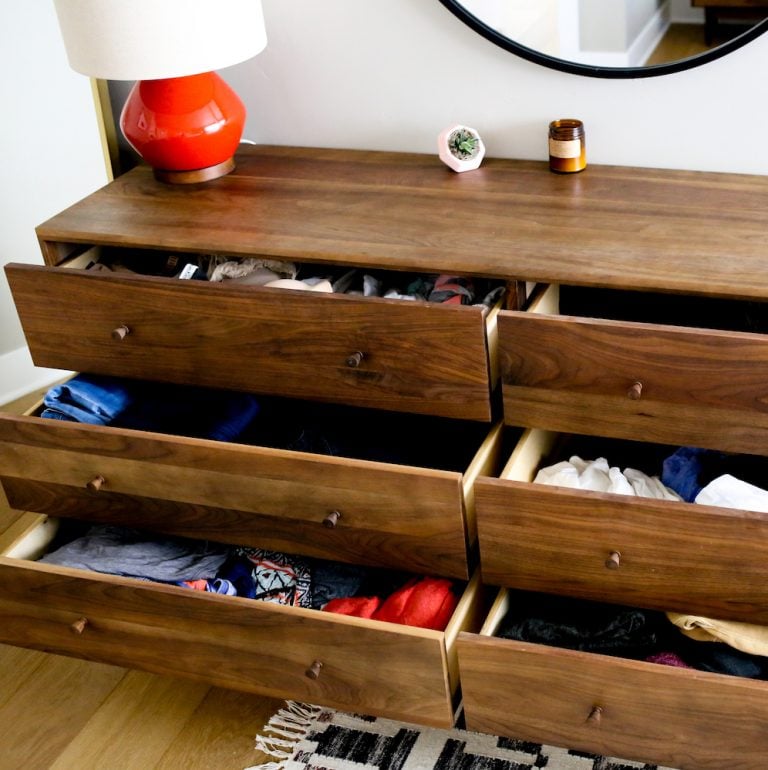
Once you’ve decided what stays, give everything a home. Organize your closet and drawers by category (tees and tanks, tops, jeans, trousers, skirts, etc.) so it’s easy to find what you need.
Pro tip: Leave a little breathing room between hangers in your closet and dresser drawers. A little space makes getting dressed and keeping your closet organized so much easier.
How to maintain your decluttered closet
Now that you’ve decluttered your clothes, the goal is to keep it from gradually filling up again. Here are a few things I recommend to my coaching clients after a closet cleanout:
- Keep a donation bag in your closet. When you try something on and it doesn’t feel right, put it in the bag instead of hanging it back up. If you’re looking for more to fill it, my declutter checklist has 125 items you can let go of around the house.
- Follow the one-in, one-out rule. When something new comes in, something else goes out. This helps keep your wardrobe from gradually growing back to where it started.
- Think before you buy. Be intentional about what you bring into your wardrobe so you don’t undo all your hard work over the next few months. If you’d like help figuring out what to keep and what to buy, my guides to how to build a capsule wardrobe and creating a minimalist wardrobe will help you build a wardrobe that works together and makes getting dressed easier.
And if your closet is just the start, my guides on how to declutter your home and how to declutter and organize toys will help you keep the momentum going in other rooms.
Ready for a calmer, easier-to-manage home?
Declutter coaching can help you simplify the stuff and create systems that make your home easier to maintain.
Frequently asked questions about decluttering clothes
What is the 90-90 rule for decluttering clothes?
The 90-90 rule is a filter that helps you decide whether to keep a piece of clothing you’re unsure about. Ask yourself two questions: Have I worn this in the past 90 days? And, will I wear it in the next 90 days? If the answer to both is no, it may be time to let it go.
Keep in mind that this rule works best when you account for the season. When in doubt, consider whether the item fits your lifestyle and whether you’ll realistically reach for it when the right season comes around.
How many clothes should I keep?
There’s no magic number of clothes you should own. The right amount depends on your lifestyle, the space you have, your laundry routine, and how often you like to change up your outfits. Rather than aiming for a specific number, focus on keeping clothes that fit well, work for your life, and are easy to mix and match.
How do I let go of expensive clothes without feeling guilty?
Expensive clothes you don’t wear have no value, and keeping them won’t get that money back. If it’s in good condition, try selling or consigning it to recoup some of the cost. Otherwise, pass it on to someone who will use it better, and learn from the purchase so you can choose differently next time.